How Often Should a Slate Roof Be Inspected? A Simple Year-Round Schedule
A month-by-month routine for inspecting a slate roof from the ground, spotting slipped slates and blocked...

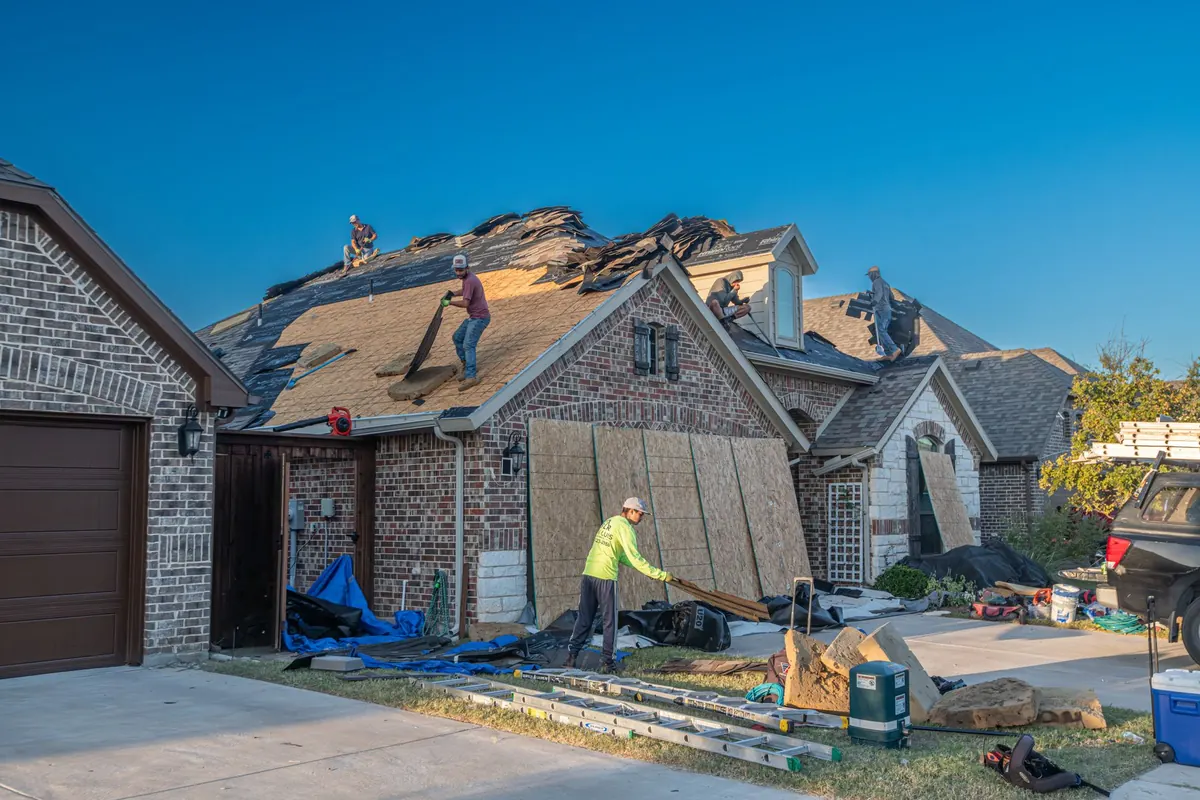
A slipped or cracked slate looks like a ten-minute job. The slate is lying in the gutter, the gap in the roof is barely a hand wide, and a replacement costs less than a takeaway. Then it rains, and a brown ring appears on the bedroom ceiling.
Slate repairs rarely fail because of the slate. They fail because of the small decisions made while someone is up there in the cold, halfway through a job they would rather have finished. A nail picked off the van shelf. A slate that is nearly the right size. An underlay torn by a boot and never checked. None of it feels important at the time; all of it decides whether the repair lasts thirty years or one winter.
These are the mistakes that cause the most trouble, and how to sidestep them.
Slate is remarkably durable. The nails holding it are not. When you see a slipped slate, the slate itself is usually fine — the nail beneath it has rusted through, and the slate has simply slid out of place. Refitting it with a nail that will do the same thing in a decade is not a repair; it is a delay.
Use fixings that will outlast the slate: copper, silicon bronze or stainless steel. Bright electro-plated nails have a thin coating and are not worth the labour of getting up there. Hot-dip galvanised is better, but copper remains the traditional choice for good reason — it is soft enough not to crack the slate as it is driven, and it will still be intact when the slate above it has been replaced twice.
Length matters too. The nail needs to pass through the slate and grip the batten firmly without splitting it or emerging behind. And never tap a nail back into a hole it has already occupied. A used hole, or a nail driven into a split batten, has almost no hold, and the first decent gale will work the slate loose again. If you can pull a fixing out of a batten with your fingertips, it was never holding anything.
Slate is a rainscreen, not a seal. Most water runs off it, but wind-driven rain and capillary action get past the laps, and the underlay beneath carries that water down to the gutter. Once slates are lifted, you can see it — and its condition decides whether the repair is worth doing at all.
If the underlay is brittle, torn or sagging between rafters, replacing one slate is cosmetic. Water will find its way through regardless, and the ceiling stain will return. If it is sound, protect it. Work from a board rather than kneeling directly on the membrane, keep tools off it, and do not drag slates across it. A torn membrane underneath a freshly repaired patch is a frustrating way to spend a weekend.
On older roofs there may be no underlay at all — just sarking boards, or slates laid tight and relying on the laps alone. That is not automatically a problem, but it does mean the slates themselves are the only defence, so a chipped or cracked slate on that roof matters far more than it would on a modern one.
Slates are sold by size, thickness and grade, and on an older roof they have weathered to a colour no new slate will replicate exactly. Appearance matters, but size is the issue that causes leaks. A slate shorter than its neighbours sits too high in the course, reducing the headlap — the amount each slate overlaps the one below. Lose that overlap and wind-driven rain can track sideways and upwards, past the slate and onto the underlay beneath.
A slate that is too long will overshoot the course, look obviously wrong and may crack against the slate below. If you must cut one to fit, cut the head rather than the tail: the tail is the exposed weathering edge, while the head is hidden beneath the course above. Where looks matter, reclaimed slates from a similar roof will blend in far better than new ones.
Thickness is the quiet one. A slate noticeably thicker than its neighbours will not sit flat in the course, no matter how patiently you coax it. Measure the old slate before you buy the new one.
If you hear a slate crack, someone nearby is leaning on a hammer. When a slate will not sit flat or a nail will not drive, the answer is never more force.
The usual culprits:
Deal with the cause instead. Clear the gap with a slate ripper, move the fixing along the batten, or cut out and replace the damaged section. A slate forced into position will be cracked, chipped or loose within a season — and the crack is often at a corner you cannot see from the ground.
Slates are fixed at the head, above the line the course above will cover. Fix too low and the nail hole sits in the exposed part of the slate, where water can reach it and where the slate flexes most in the wind. Fix too close to a corner or a side edge and the slate will crack along the grain the first time it moves. Both faults are invisible once the repair is finished, and both will let water in long before the slate wears out.
The rule of thumb is simple: the nail hole should sit roughly 25–30mm up from the head edge and the same distance in from each side, tucked beneath the slate above so it never sees daylight. On a wide slate, use two fixings rather than one. And leave a little slack — a slate should hang on its nail, not be clamped to the batten. Slate moves with the seasons, and a fixing driven home hard leaves it no room to do so.
Getting one slate out without breaking its neighbours is the real skill of slate repair, and it is the part most often rushed. A hammer and bolster will shift the slate you want and shatter the two beside it. So will a ladder resting on the course below, a knee planted on brittle slate, and a replacement dragged across the roof.
Use a slate ripper. It slides under the slate, hooks the nail, and cuts or pulls it without lifting the whole course. Work slowly, expect the slate above to need a little gentle encouragement, and never lever against the tail of a neighbouring slate — that is exactly where the crack will appear, usually silently, usually to be discovered after the next storm.
Once the slate is out, take a moment. If two or three others nearby feel loose under a fingertip, they are next in line. Fix them now, while the access and the tools are already in place, rather than paying for the same scaffold twice.
A single slipped slate is weather. Half a dozen in one season is a diagnosis. Slates do not slip at random; they slip because the nails holding them have rusted through at roughly the same rate, which means the ones still in place are not far behind.
Look for the pattern. If slipped slates are scattered across the whole roof, nail fatigue has set in and patching will become an annual ritual. If they are clustered on one elevation, something is keeping that slope wet — a blocked gutter overflowing behind the fascia, a leaking valley, a failed chimney flashing, or a drip from damaged work higher up. Replacing the slate without fixing the source simply resets the clock.
Check the batten while the slate is out, too. A soft batten will not hold a new nail, however good the fixing. And if a ceiling stain keeps returning when no slate is missing at all, look in the loft: condensation, not rainwater, is often the culprit, and no amount of roofing will cure it.
None of this costs much next to a second visit. The item worth spending properly on is access: a proper roof ladder or a small tower makes the job safer, faster and far less likely to end in cracked slates.
The cheapest repair is the one you only have to do once. Every shortcut taken at height is paid for twice — in scaffold, in labour, and in the ceiling you have to repaint.
Slate is one of the most forgiving roof coverings ever made. Laid properly and left alone, it will sit there for a century. Almost every failure blamed on the slate turns out to be a failure of something underneath it, or of something very small. Get the details right on the way up, and you will not be going back up next winter.
Photo: Ryan Stephens / Pexels
A month-by-month routine for inspecting a slate roof from the ground, spotting slipped slates and blocked...
Twelve seasonal jobs — from clearing gutters and checking flashings to replacing slipped slates and...
A practical guide to slate roof detailing — mortar-bedded and dry-fix ridges, hip irons and trays, lead...