Seven Common Mistakes When Replacing Slipped or Broken Slates
A slipped slate looks like a ten-minute job, but wrong nails, mismatched sizes and torn underlay turn a...

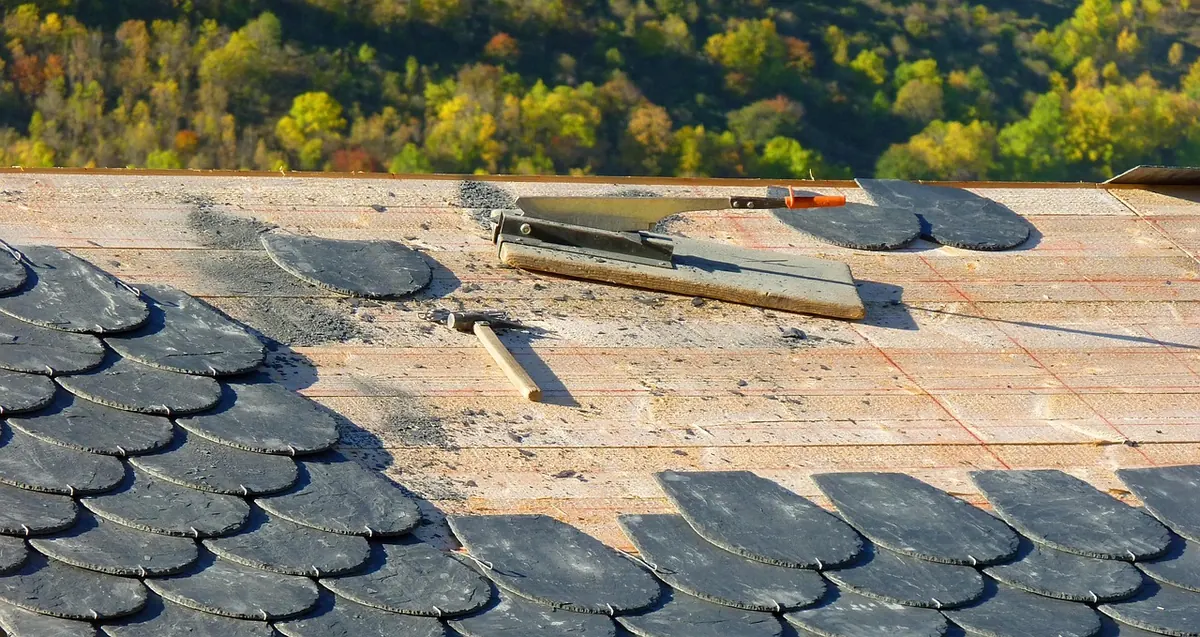
Slate is forgiving. It sits up there for decades, shrugging off rain, frost and whatever the prevailing wind throws at it, giving you almost no reason to think about it at all. That is exactly the trouble. By the time a slate roof makes itself noticed — a brown patch spreading across a bedroom ceiling, a damp smell in the loft — water has usually been finding its way in for weeks.
You do not need to climb anything to stay ahead of it. You need a habit: a quick look from the ground most months, a proper check in spring and autumn, and a roofer on the phone the moment something genuinely changes. Twenty minutes with a pair of binoculars is the whole job.
For most slate roofs, three kinds of inspection cover almost everything:
Newly repaired or re-slated roofs are worth watching a little more closely for the first year. Older roofs with heavy moss deserve the same routine, but with a lower tolerance for "I'll deal with it in spring".
This is built around the British weather year, so you are checking for the right things at the right time rather than repeating the same survey twelve times.
Stand back far enough to see the whole elevation, then work slowly along it. Binoculars help, and so does your phone camera zoom — a photo taken from the same spot each season makes changes obvious.
Inside, look for ceiling stains, peeling paint at the top of a wall, and a musty smell in the loft. Water rarely appears where it enters.
Slate is brittle and slick. Walking on it cracks tiles, and cracks let water in — so a well-meaning inspection can cost you more than the problem you were checking for. Stay off the roof, do not lean ladders against gutters, and do not prod at slates with a pole. Anything above gutter level is a job for someone with the right access equipment and insurance.
Book someone promptly if you spot any of the following:
After storm damage, photograph everything before anything is moved. If you plan to claim, check your buildings insurance policy wording — insurers usually expect you to prevent further damage, but the details vary, so read the policy or speak to your insurer before work starts.
Put two reminders in your calendar: the first dry weekend in April, and the first in September. Add a note to your phone each time you look, with the date and anything that has changed — it is far easier to describe a problem to a roofer when you can say when it appeared. If your roof has matching spares in the garage or loft, keep them; old slates are hard to match later. And do not let a handful of slipped slates convince you that you need a new roof. Most of the time, a small repair is all that is needed, provided you catch it early.
Photo: macayran / Pixabay
A slipped slate looks like a ten-minute job, but wrong nails, mismatched sizes and torn underlay turn a...
Twelve seasonal jobs — from clearing gutters and checking flashings to replacing slipped slates and...
A practical guide to slate roof detailing — mortar-bedded and dry-fix ridges, hip irons and trays, lead...